How to Choose the Best Sunscreen for Your Skin Type in India
Your sunscreen says SPF 50. But does it actually suit your skin?
By Roopsee · · 10 min read
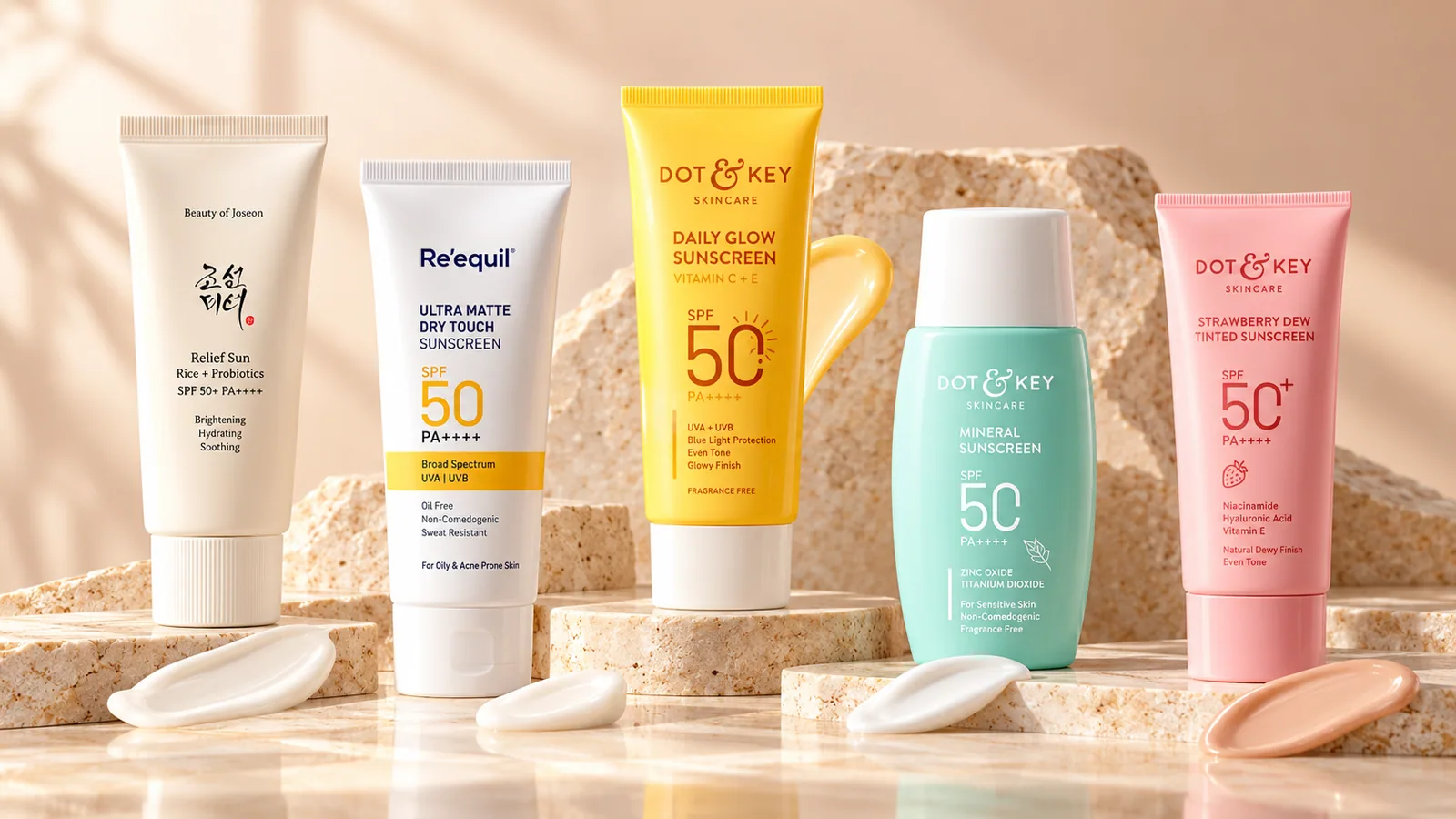
Your sunscreen says SPF 50. But does it actually suit your skin?
Some sunscreens leave your face looking greasy by lunchtime. Others feel too drying, leave a visible white cast or simply refuse to sit comfortably under makeup.
And with so many sunscreens available in India, finding the right one can feel like a never-ending search.
Here's the thing: the best sunscreen isn't necessarily the most expensive, the most viral or the one with the highest SPF. It's one that offers reliable UV protection and feels comfortable enough for you to use consistently.
Whether you have oily, dry, combination, sensitive or acne-prone skin, this guide will help you understand what to look for before buying your next sunscreen.
Why Is Sunscreen Important for Indian Skin?
Sunscreen isn't just for beach vacations or summer holidays.
Ultraviolet (UV) radiation can affect your skin throughout the year, including on cloudy days.
Regular sun protection helps reduce:
- Sunburn
- Premature signs of skin ageing
- Sun-related dark spots
- UV-related skin damage
- The risk of skin cancer
For people dealing with pigmentation, melasma or post-acne dark marks, sun protection is especially important.
And no, having a deeper skin tone doesn't mean you can skip sunscreen.
Melanin provides some natural protection against UV radiation, but it doesn't make skin immune to sun damage.
SPF 30 vs SPF 50: What's the Difference?
SPF stands for Sun Protection Factor.
It primarily measures how effectively a sunscreen protects against UVB-induced sunburn under standard testing conditions.
With correct application:
- SPF 30 filters approximately 96.7% of UVB rays.
- SPF 50 filters approximately 98% of UVB rays.
The difference may look small, but it can still matter, particularly when you spend time outdoors.
However, SPF 50 doesn't mean you can stay in the sun all day without reapplying.
What Does PA++++ Mean?
PA ratings indicate levels of protection against UVA radiation under the relevant testing system.
UVA rays contribute to photoageing and certain pigmentation concerns.
PA++++ is the highest category in the commonly used PA system.
When choosing a sunscreen, look for:
Broad-spectrum protection, SPF 30 or higher, and suitable water resistance for your activities.
1. Best Sunscreen for Oily Skin
Does your face start looking shiny within a few hours of washing it?
You may prefer a sunscreen with a lightweight, matte or gel-like finish.
What to Look For
- Lightweight texture
- Comfortable, non-greasy finish
- Non-comedogenic formulation where appropriate
- Broad-spectrum SPF 30 or higher
- Suitable water resistance, especially if you sweat outdoors
Explore on Roopsee: Re'equil Ultra Matte Dry Touch Sunscreen SPF 50 PA++++
Shop Re'equil Ultra Matte Dry Touch Sunscreen on Roopsee
This sunscreen uses a silicone-based formulation and includes UV filters such as zinc oxide, titanium dioxide and other organic UV filters.
Its ultra-matte positioning makes it an option worth exploring if you prefer a less shiny finish.
Good to know: It contains fragrance, so users with fragrance sensitivity should review the ingredient list carefully.
2. Best Sunscreen for Dry Skin
If your skin frequently feels tight or flaky, a very matte sunscreen may not be the most comfortable option.
Dry skin often benefits from sunscreen formulations that include moisturising ingredients.
What to Look For
- Creamy or moisturising texture
- Humectants such as glycerin
- Emollients that help soften the skin
- Comfortable finish without excessive tightness
- Broad-spectrum UV protection
Explore on Roopsee: Beauty of Joseon Relief Sun Rice + Probiotics SPF50+ PA++++
Shop Beauty of Joseon Relief Sun on Roopsee
This Korean sunscreen contains 30% rice extract, glycerin, niacinamide and multiple UV filters.
Its skincare-oriented formulation makes it an option to consider for those who prefer a moisturising sunscreen experience.
However, its suitability depends on individual tolerance, not just the presence of rice extract.
3. Best Sunscreen for Acne-Prone Skin
If you regularly experience pimples or clogged pores, you may be cautious about applying sunscreen.
But acne-prone skin still needs sun protection.
Certain acne treatments can increase sensitivity to sunlight, and UV exposure can worsen the appearance of post-acne pigmentation.
What to Look For
- Non-comedogenic formulations
- Lightweight textures
- Products that don't irritate your skin
- Comfortable wear throughout the day
- SPF 30 or higher with broad-spectrum coverage
Explore on Roopsee: Dot & Key Daily Glow Sunscreen SPF 50
Shop Dot & Key Daily Glow Sunscreen
This sunscreen is marketed as a water-light formula with SPF 50+ PA++++, Vitamin C derivatives and Vitamin E.
Its lightweight formulation may appeal to shoppers who dislike heavy sunscreen textures.
However, acne-prone users should still check the complete ingredient list and assess how their skin tolerates the product.
Important: Sunscreen is not an acne treatment. Persistent acne should be evaluated by a dermatologist.
4. Best Sunscreen for Sensitive Skin
Sensitive skin can react to fragrances, certain UV filters or other formulation ingredients.
If sunscreens frequently sting or cause redness, choosing a simpler, well-tolerated formulation may help.
What to Look For
- Fragrance-free options where possible
- Minimal potential irritants
- Mineral UV filters if preferred
- Broad-spectrum protection
- Comfortable formulation for daily use
Mineral Sunscreen: An Option Worth Considering
Mineral sunscreens commonly use zinc oxide, titanium dioxide or both as UV filters.
They can be useful options for some people with sensitive skin, although they aren't guaranteed to be irritation-free.
Explore on Roopsee: Dot & Key Mineral Sunscreen SPF 50
Shop Dot & Key Mineral Sunscreen
This mineral sunscreen is listed with SPF 50+ PA++++ and includes zinc oxide, titanium dioxide and additional skincare ingredients.
Review the complete formula before purchasing, especially if you have known ingredient sensitivities.
5. Best Sunscreen for Combination Skin
Combination skin can be oily around the forehead, nose and chin but dry around the cheeks.
The challenge is finding a sunscreen that doesn't feel overly greasy or leave drier areas uncomfortable.
What to Look For
- Lightweight lotion or gel-cream texture
- Balanced hydration
- Comfortable, non-greasy finish
- Broad-spectrum SPF protection
Depending on your needs, a lightweight sunscreen may be sufficient on its own after cleansing, or you may benefit from applying moisturiser first.
Explore Sunscreen Options
The Dot & Key Daily Glow Sunscreen SPF 50 and Beauty of Joseon Relief Sun are two different formulations worth comparing.
Look beyond the SPF number and consider finish, ingredients, quantity and your skin's tolerance.
6. Best Sunscreen for Pigmentation and Dark Spots
If you're dealing with dark spots, melasma or post-inflammatory hyperpigmentation, protecting your skin from UV radiation is essential.
But there's another factor worth knowing about: visible light.
Visible light can contribute to pigmentation in some people, especially those with deeper skin tones.
What to Look For
A broad-spectrum sunscreen is essential.
For people with melasma or pigmentation concerns, dermatologists often recommend tinted sunscreen containing iron oxides, which can provide additional protection against visible light.
Explore on Roopsee
Dot & Key Strawberry Dew Tinted Sunscreen SPF 50+ PA++++ is a tinted sunscreen option listed in Roopsee's matching catalogue.
Its ingredient list includes iron oxide pigments, which can contribute to visible-light protection when properly formulated.
However, protection depends on the finished product, so don't assume all tinted sunscreens provide identical coverage.
7. Mineral vs Chemical Sunscreen: Which Is Better?
One of the most common sunscreen questions is whether mineral or chemical sunscreen is better.
The two categories differ mainly in the UV filters used.
Mineral Sunscreens
Common mineral filters include:
- Zinc oxide
- Titanium dioxide
Mineral sunscreens may appeal to some sensitive-skin users, although texture and white cast vary by formulation.
Chemical or Organic-Filter Sunscreens
Organic UV filters include ingredients such as:
- Diethylamino Hydroxybenzoyl Hexyl Benzoate
- Ethylhexyl Triazone
- Bis-Ethylhexyloxyphenol Methoxyphenyl Triazine
These ingredients appear in many modern sunscreen formulations.
Some sunscreens combine mineral and organic UV filters.
The takeaway: Both types can provide effective protection when properly formulated, tested and applied. Choose according to protection, comfort and individual tolerance.
How to Choose the Right Sunscreen for Your Skin Type
| Skin type or concern | What to prioritise |
|---|---|
| Oily skin | Lightweight, matte or gel textures |
| Dry skin | Moisturising cream or lotion textures |
| Acne-prone skin | Non-comedogenic, comfortable formulas |
| Sensitive skin | Well-tolerated, preferably fragrance-free options |
| Combination skin | Balanced hydration and lightweight finish |
| Pigmentation | Broad-spectrum SPF and tinted iron-oxide options when appropriate |
Remember that these are shopping considerations, not guarantees that any specific sunscreen will suit everyone.
How Much Sunscreen Should You Apply?
Using enough sunscreen matters just as much as choosing the right SPF.
For the face, dermatologists commonly advise an amount of approximately one teaspoon, with enough additional product to cover the neck and other exposed areas adequately.
Apply it evenly before sun exposure.
When outdoors, reapply approximately every two hours and after swimming, heavy sweating or towel drying, following the product's specific directions.
Don't forget commonly missed areas such as:
- Ears
- Neck
- Hairline
- Hands
- Exposed scalp
Five Common Sunscreen Mistakes
Mistake 1: Applying Too Little
Using only a tiny amount may provide less protection than the labelled SPF.
Mistake 2: Skipping Sunscreen on Cloudy Days
UV radiation can still reach the skin on cloudy days.
Mistake 3: Thinking SPF 50 Lasts All Day
Higher SPF doesn't eliminate the need for reapplication.
Mistake 4: Choosing Sunscreen Based Only on Price
A higher price doesn't automatically mean better protection or better suitability for your skin.
Mistake 5: Buying a Viral Sunscreen Without Checking Your Skin Type
A sunscreen that looks beautiful on someone else may feel greasy, drying or irritating on your skin.
How Roopsee Helps You Shop for Sunscreen Smarter
Finding the right sunscreen shouldn't require endless scrolling through product listings.
You need to understand three things:
1. Skin suitability: Is the sunscreen relevant to your skin type and concerns?
2. Ingredients and formulation: Does it have the UV protection and finish you're looking for?
3. Price and value: Are you getting a product that fits your needs and budget?
Roopsee helps shoppers explore skincare based on their skin profiles and discover personalised Skin Match scores.
Instead of choosing a sunscreen only because it's trending, you can review products that better align with your needs.
Visit Roopsee.com to discover sunscreen options and shop more confidently.
Don't just buy SPF. Find the sunscreen that fits your skin.
Frequently Asked Questions
1. Which sunscreen is best for oily skin in India?
Lightweight, matte or gel-based sunscreens can be comfortable for oily skin. Choose a broad-spectrum SPF 30 or higher product that you can apply generously.
2. Is SPF 50 enough for Indian weather?
SPF 50 can provide strong UVB protection when correctly applied. Broad-spectrum coverage, appropriate reapplication, shade and protective clothing are also important.
3. Which sunscreen is best for acne-prone skin?
Look for a comfortable, non-comedogenic formulation. Acne-prone skin can react differently to different products, so there isn't one universal best sunscreen.
4. Can sunscreen help prevent dark spots?
Regular sun protection helps limit UV-related pigmentation. Tinted sunscreens containing iron oxides may offer additional protection against visible light that contributes to dark spots.
5. Is mineral sunscreen better for sensitive skin?
Some people with sensitive skin prefer mineral sunscreen, but not every mineral formula is automatically suitable. Review the complete ingredient list.
6. Can I use sunscreen without moisturiser?
Some moisturising sunscreen formulas may provide sufficient hydration for certain skin types. Others may need a separate moisturiser underneath.
7. Should I wear sunscreen indoors?
It depends on your exposure, including time spent near windows and your specific skin concerns. Direct sunlight through windows can contribute to UVA exposure.
8. Where can I find sunscreens for different skin types in India?
Explore sunscreens from brands such as Re'equil, Dot & Key and Beauty of Joseon on Roopsee, where you can review product information and personalised skin-matching scores.
Final Thoughts
The best sunscreen for your skin isn't determined by a viral review or a single trending ingredient.
It comes down to reliable UV protection, suitable formulation, skin tolerance and consistent application.
Whether you prefer a matte sunscreen, hydrating lotion or tinted mineral formula, choose one that fits comfortably into your everyday routine.
Know your skin. Compare your options. Shop smarter with Roopsee.
Disclaimer: This article provides general skincare education and does not replace medical advice. Consult a qualified dermatologist for persistent skin irritation, unusual skin changes or specific pigmentation concerns.