Niacinamide vs Salicylic Acid: Which Is Better for Your Skin?
Published by Roopsee | Skincare Ingredient Guide
By Roopsee · · 6 min read
Published by Roopsee | Skincare Ingredient Guide
Are you confused between niacinamide and salicylic acid? You're not alone.
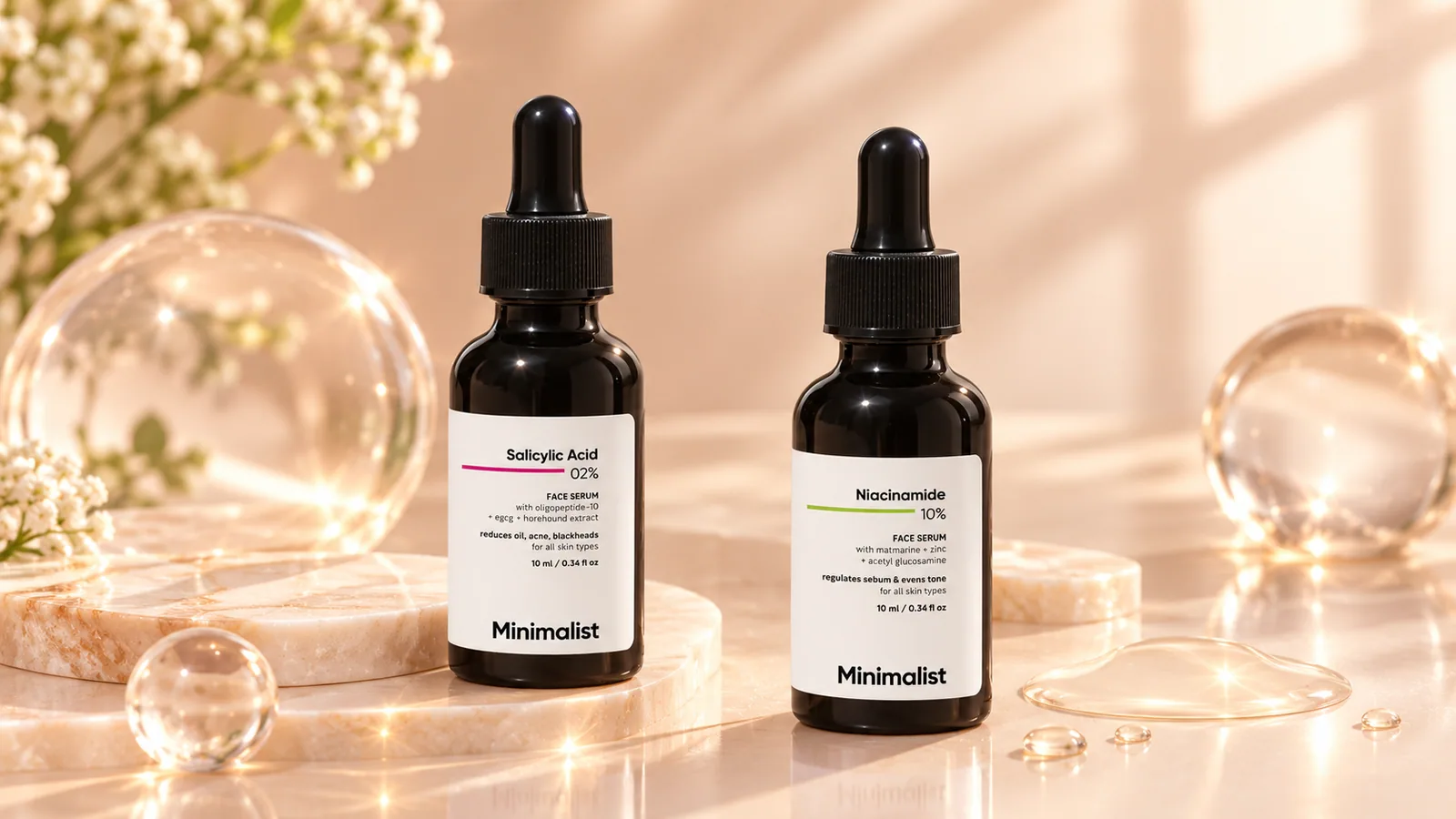
Both ingredients are popular in skincare products for oily and acne-prone skin, but they work differently. While niacinamide is commonly used to support the skin barrier, balance oiliness and improve uneven skin tone, salicylic acid helps exfoliate inside pores and address blackheads and whiteheads.
So, which one should you choose?
The answer depends on your skin type, your main concern and the formulation of the product you're considering.
Here's how to make a more informed choice.
What Is Niacinamide?
Niacinamide, also known as vitamin B3, is a water-soluble skincare ingredient commonly found in serums, moisturisers and toners.
It is popular because it can support several skin concerns without relying on exfoliation.
Benefits of Niacinamide for Skin
1. Supports the skin barrier
Niacinamide helps maintain the skin's protective barrier, which plays an important role in retaining moisture and reducing environmental irritation.
2. Helps balance oily skin
Niacinamide may help regulate excess sebum and improve the appearance of oiliness over time.
3. Improves uneven skin tone
Regular use of appropriately formulated niacinamide products may help reduce the appearance of certain dark spots and uneven pigmentation.
4. Improves the appearance of pores
Niacinamide cannot permanently shrink pores, but managing oiliness and improving overall skin texture may make them appear less noticeable.
Who Can Consider Niacinamide?
Niacinamide may be suitable for people experiencing:
- Oily or combination skin
- Uneven skin tone
- Mild dark spots
- Excess oiliness
- A weakened skin barrier
However, concentration and formulation matter. Even products containing typically well-tolerated ingredients can cause irritation in some users.
What Is Salicylic Acid?
Salicylic acid is a beta-hydroxy acid (BHA) commonly found in acne-focused cleansers, serums and exfoliating products.
Unlike niacinamide, salicylic acid primarily works as an exfoliating ingredient.
It helps remove accumulated dead skin cells and unclog pores.
Benefits of Salicylic Acid for Skin
1. Helps clear clogged pores
Salicylic acid is particularly useful for skin concerns involving blocked pores.
2. Targets blackheads and whiteheads
Its exfoliating action makes it a common ingredient in products for comedonal acne.
3. Helps with mild acne
Salicylic acid may improve certain types of mild acne, although it is not the best treatment for every form of acne.
4. Improves rough skin texture
By removing dead skin cell buildup, it can help skin appear smoother.
Who Can Consider Salicylic Acid?
Salicylic acid products may be useful for people experiencing:
- Blackheads
- Whiteheads
- Clogged pores
- Oily skin
- Certain forms of mild acne
However, overusing salicylic acid can cause dryness, stinging, peeling or irritation, especially when combined with other exfoliating ingredients.
Niacinamide vs Salicylic Acid: Key Differences
| Feature | Niacinamide | Salicylic Acid |
|---|---|---|
| Ingredient category | Vitamin B3 derivative | Beta-hydroxy acid |
| Main purpose | Skin barrier and tone support | Exfoliation and pore unclogging |
| Oily skin | May help balance oiliness | Helps address clogged pores |
| Blackheads | Not a primary treatment | Often more useful |
| Dark spots | May help improve uneven tone | Not a primary pigmentation treatment |
| Sensitive skin | Often well tolerated | Can be irritating |
| Exfoliating action | No | Yes |
| Daily use | Often possible | Depends on formulation and tolerance |
The key difference: Niacinamide mainly supports skin balance and barrier function, while salicylic acid helps address clogged pores through exfoliation.
Which Is Better for Oily and Acne-Prone Skin?
If you have oily skin, both ingredients may have a place in your routine.
But the right choice depends on your primary concern.
Choose niacinamide when:
Your main concerns are excess oiliness, uneven skin tone and maintaining a healthy skin barrier.
Consider salicylic acid when:
Your main concerns are blackheads, whiteheads and clogged pores.
If you experience painful, deep or persistent acne, a dermatologist can recommend more appropriate treatments.
A product being popular for acne-prone skin does not automatically mean it will suit everyone with acne.
Can You Use Niacinamide and Salicylic Acid Together?
Yes. These ingredients can be used in the same skincare routine when the products are formulated appropriately and your skin tolerates them.
For beginners, introducing products separately is usually a sensible approach.
Example Morning Routine
- Gentle cleanser
- Niacinamide serum, if suitable
- Moisturiser
- Broad-spectrum sunscreen with SPF 30 or higher
Example Night Routine
- Gentle cleanser
- Salicylic acid product, according to label directions and skin tolerance
- Moisturiser
Start salicylic acid gradually rather than immediately combining multiple exfoliating products.
Stop using a product if it causes significant irritation, and consult a dermatologist for persistent reactions.
How to Choose the Right Skincare Product
Knowing which ingredient you need is only one part of skincare shopping.
Two different products containing niacinamide can behave differently because of their concentration, supporting ingredients and overall formulation.
Before buying a skincare product, consider:
- Your skin type: Is your skin oily, dry, combination or sensitive?
- Your main concern: Are you targeting clogged pores, uneven tone or dryness?
- Ingredient concentration: Is the formulation appropriate for your experience and tolerance?
- Supporting ingredients: Does the formula include moisturising or soothing components?
- Price and value: Are you choosing the right product for your needs and budget?
This is where Roopsee can make skincare discovery easier.
Find Skincare That Matches Your Skin With Roopsee
Instead of choosing a trending serum simply because everyone is talking about it, start by understanding your own skin.
Roopsee's Match My Skin tool helps you discover products based on your skin type, sensitivity and concerns.
Explore personalised product-matching scores and find skincare options relevant to your profile before making a purchase.
Whether you're looking for a niacinamide serum, salicylic acid cleanser, sunscreen or moisturiser, the goal is to choose a product that fits your skin rather than relying only on trends.
Know your skin. Explore your matches. Shop smarter with Roopsee.
Visit roopsee.com to get started.
Frequently Asked Questions
1. Is niacinamide or salicylic acid better for pimples?
Salicylic acid may be more useful for clogged pores, blackheads and whiteheads. Niacinamide may help support oil balance and the skin barrier, but it is not a substitute for proven acne treatments.
2. Can I use niacinamide every day?
Many niacinamide products are formulated for daily use. Follow the manufacturer's directions and adjust based on your skin's tolerance.
3. Is salicylic acid suitable for sensitive skin?
Some people with sensitive skin may tolerate low-strength salicylic acid products, but others may experience dryness or irritation. Introduce it cautiously and seek professional advice when necessary.
4. Which ingredient is better for dark spots?
Niacinamide may help improve the appearance of uneven pigmentation. Salicylic acid primarily targets exfoliation and clogged pores. Persistent pigmentation may require other treatments.
5. Can I apply niacinamide after salicylic acid?
Yes, provided both products suit your skin and their instructions permit layering. If you're a beginner, introduce one new product at a time.
6. How do I know which serum suits my skin?
Start by identifying your skin type and primary concern. Review the complete formulation rather than choosing only by ingredient name. Roopsee's Match My Skin tool can help you explore products matched to your profile.
Final Thoughts
There is no universal winner in the niacinamide vs salicylic acid debate.
Niacinamide can be useful for supporting the skin barrier, improving uneven tone and managing oiliness, while salicylic acid is generally a more targeted option for clogged pores and blackheads.
Your skin type, existing routine and product formulation should guide your decision.
Before you buy your next skincare product, discover what suits your skin on Roopsee.
Disclaimer: This article provides general skincare education and is not a medical diagnosis or personalised treatment recommendation. Consult a qualified dermatologist for persistent or severe skin conditions.